Skip to content

Annual Report

Our Vision

A world that embraces the role of responsible seafood in meeting global nutrition needs.

Our Mission

The Global Seafood Alliance (GSA) is an international nongovernmental organization dedicated to advancing responsible seafood practices through education, advocacy and third-party assurances (demonstration).

Annual Report

GSA advances responsible seafood practices worldwide through education, advocacy and demonstration. (1)

Our Mission
 

The Global Seafood Alliance GSA is an international nongovernmental organization dedicated to advancing responsible seafood practices through education, advocacy and third-party assurances (demonstration).

Annual Report

2025

Our Mission

Global Seafood Alliance (GSA) advances responsible seafood practices worldwide through education, advocacy, and demonstration.
Through our membership program and global projects around the world supporting the seafood industry
Through our world-class third-party certification programs, Best Aquaculture Practices (BAP) and Best Seafood Practices (BSP)
Through our Responsible Seafood Summit, Advocate magazine, and Aquademia podcast

Intro

Intro

Transcending transactions

If I’m ever asked what the Global Seafood Alliance does, I’ll say look beyond the organization, the brands, the advocacy work, and even the talented team.

That’s because GSA is a global community of people and partner organizations whose dedication to responsible seafood is making great things possible. So, if you’re reading this, you’re GSA. You’re helping make seafood a stronger industry and you’re improving people’s lives through a great collective effort and we thank you.

As we share another activity-filled Annual Report, what continues to inspire me is that the industry relationships we’ve forged as a group transcend transactions. They are grounded in shared goals, accountability and a belief that seafood can be a positive force for people and planet. The level of engagement across our global network remains one of GSA’s greatest strengths.

It is you – an incredible global community of dedicated individuals and companies – that supports GSA’s programs, attends our events, reads our magazine, participates in our surveys and listens to (and now watches!) our podcast. And as you review our latest Annual Report, you will see how our team works to make the seafood industry more responsible, sustainable, innovative and equitable. You will also see how much progress can be achieved when industry stakeholders work together.

I’ve picked out a few highlights that illustrate how GSA is making major impact. For starters, our industry-leading Best Aquaculture Practices (BAP) standards are – by design – in a state of constant evolution, and our Standards Oversight Committee shared a few important updates this past year.

The Salmon Farm Standard Issue 3.0, which became effective in August, adopted the forage fish dependency ratio (FFDR) as a metric and introduced stronger biosecurity requirements and social responsibility clauses – three significant ways to expand the impact of certified salmon farms with valuable supply chains.

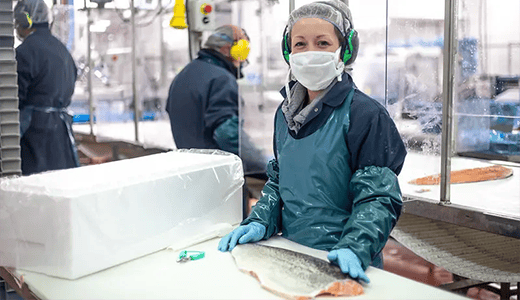
In November, the Seafood Processing Standard (SPS) launched optional Enhanced Social Modules that provide auditors with additional insight into overnight conditions at processing facilities. Looking further ahead, our team is preparing a more robust BAP Feed Mill Standard to meet the complex needs of the marketplace, while also supporting shrimp farmers as they transition to a future that prioritizes animal welfare practices.

We also saw important progress on the fisheries side of our work in 2025. The emerging Argentinian red shrimp fishery earned a big win in May, when vessels owned by Spanish seafood giant Profand achieved Responsible Fishing Vessel Standard (RFVS) certification. Commitments like this matter because consumer expectations continue to evolve. According to consumer research


Thank you for your continued support of GSA.
MIKE KOCSIS, CEO

Mike Kocsis signature

commissioned by GSA and conducted by GlobeScan, at least four in every 10 consumers now actively look for eco-labels on seafood products, with Spanish consumers reporting the most trust in our programs.

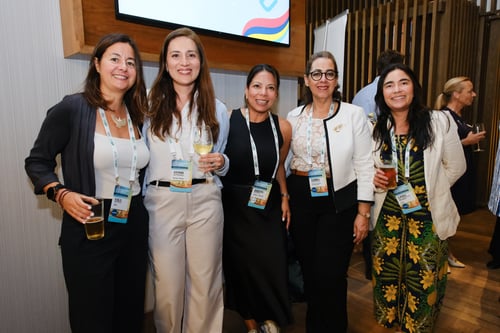
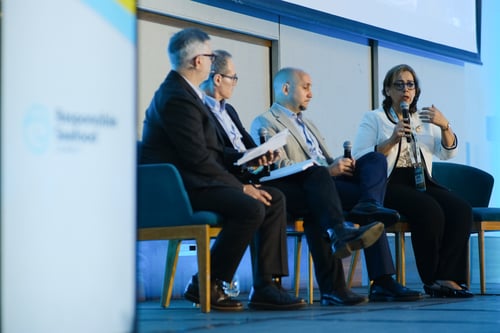
Lastly, the Responsible Seafood Summit continued to be a key date on the global seafood calendar. Held in Cartagena, Colombia, the event was informative and productive by day – and fun by night. But most importantly, it reinforced the value of bringing people together for face-to-face meetings. That sense of connection is a big part of GSA’s heritage and continues to strengthen the relationships that move our industry forward.

Last fall, GSA and BAP were honored by the Food and Agriculture Organization of the United Nations (FAO) at a ceremony in Rome for supporting FAO’s four “betters”: better production, better nutrition, a better environment and a better life. On behalf of all of us at GSA, we couldn’t be prouder to serve as a positive force in food – in the field, in conference rooms and at dinner tables everywhere. It reflects the work of a global industry committed to building a more responsible future for seafood.


MikeK (1)

Taking measures, extending impact

Some of the wisest words of advice one can receive in business go something like this: To manage something well, you must measure it. In other words, to realize future goals, assess where you are now and find ways to continuously improve your position over time, regularly stopping to take new measurements. I’ll add that it’s also important to celebrate milestones as you reach them.

Commit to continuous improvement and measure your progress toward your goals – these are fitting messages to accompany the release of our 2024 Annual Report, which highlights growth for Global Seafood Alliance programs and the new milestones that we’ve reached. For instance, the number of certified facilities increased 5 percent last year to surpass 4,100 facilities in 45 countries. While we share this measurement every year, we’re also tracking new trends. In 2024, certified producers resolved nearly 8,000 non-conformities to attain certification, a number that illustrates the rigor in our standards.

These metrics matter because they show how Best Aquaculture Practices and Best Seafood Practices standards drive our 

organization and improvement on the water wherever they’re applied. But it’s the story that numbers don’t always easily tell that shows what we’re truly shooting for: Strengthening the impact of the work we do on a holistic level. There are hundreds of thousands of employees working in BAP-certified facilities, and an estimated 60 million people working in seafood globally, and they deserve to work in a field that is always taking measures to address social responsibility, animal welfare, food safety and environmental stewardship. Certification is a strong way to demonstrate your commitment to these principles.

I like to say that growth for our program simply allows greater opportunity to extend a


positive impact. That’s really the why of what we do. The global seafood industry can have a positive and lasting impact on food security, human health and nutrition, markets and economies and, of course, the environment, if its work is done responsibly. And a combination of passion, patience and collaboration can result in meaningful change – I see it every day at GSA.

Thank you to our many strategic partners and stakeholders who support GSA’s vision, mission and day-to-day operations. A special shout out to the growing GSA team around the world. Commitment to responsible seafood and continuous improvement requires every one of us. Thank you for always putting your best foot forward.


Thank you for your support,
MIKE KOCSIS, CEO

Mike-png


2025 Year in Review

Feed Mill

March 2025

The Future of the BAP Feed Mill Standard

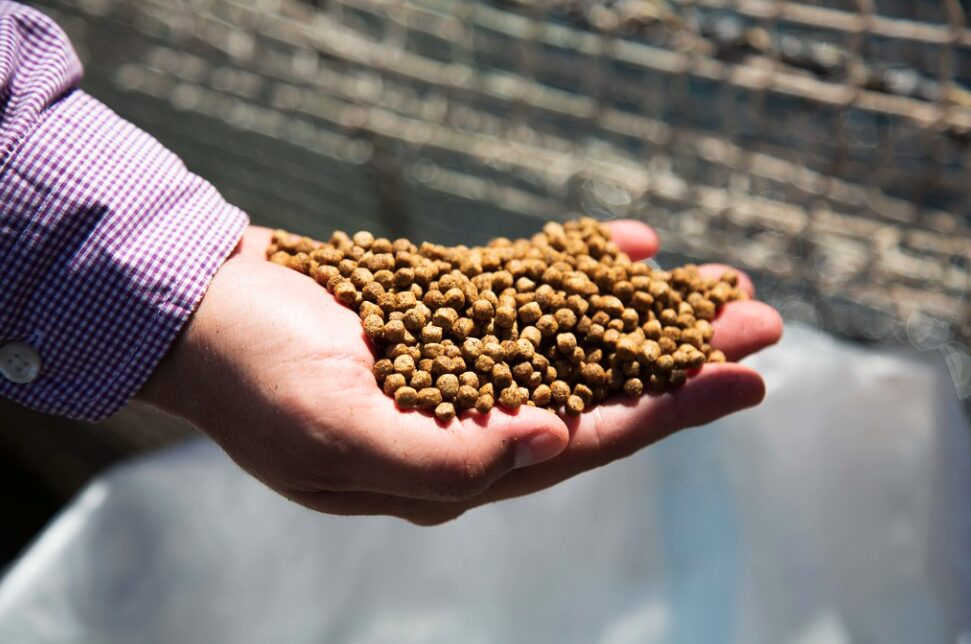
Let’s take a moment and look at where everything in the aquaculture supply chain truly begins: feeds. It’s widely recognized that the BAP certification program involves audits of hatcheries, farms, processing plants and feed mills, but we don’t spend enough time talking about the feeds themselves and where the ingredients are from.

Argentina-Puerto-Madryn-Atlantico-I-

May 2025

Profand Vessels First in Argentina to Attain Certification to Responsible Fishing Vessel Standard

The Spanish-owned multinational Profand successfully certified its Argentinian fleet of squid and shrimp vessels to the BSP Responsible Fishing Vessel Standard (RFVS).

Salmon Farm

August 2025

GSA Releases Salmon Farm Standard Issue 3.0

Updates have been made to make the standard more robust, including strengthened human rights requirements, stronger requirements for protection of predator species and stricter requirements for humane slaughter methods. This standard will also transition all salmon farms to a mandatory two-day audit duration. Once the standard becomes effective, all salmon farms must apply to Issue 3.0.

FAO Recognition

October 2025

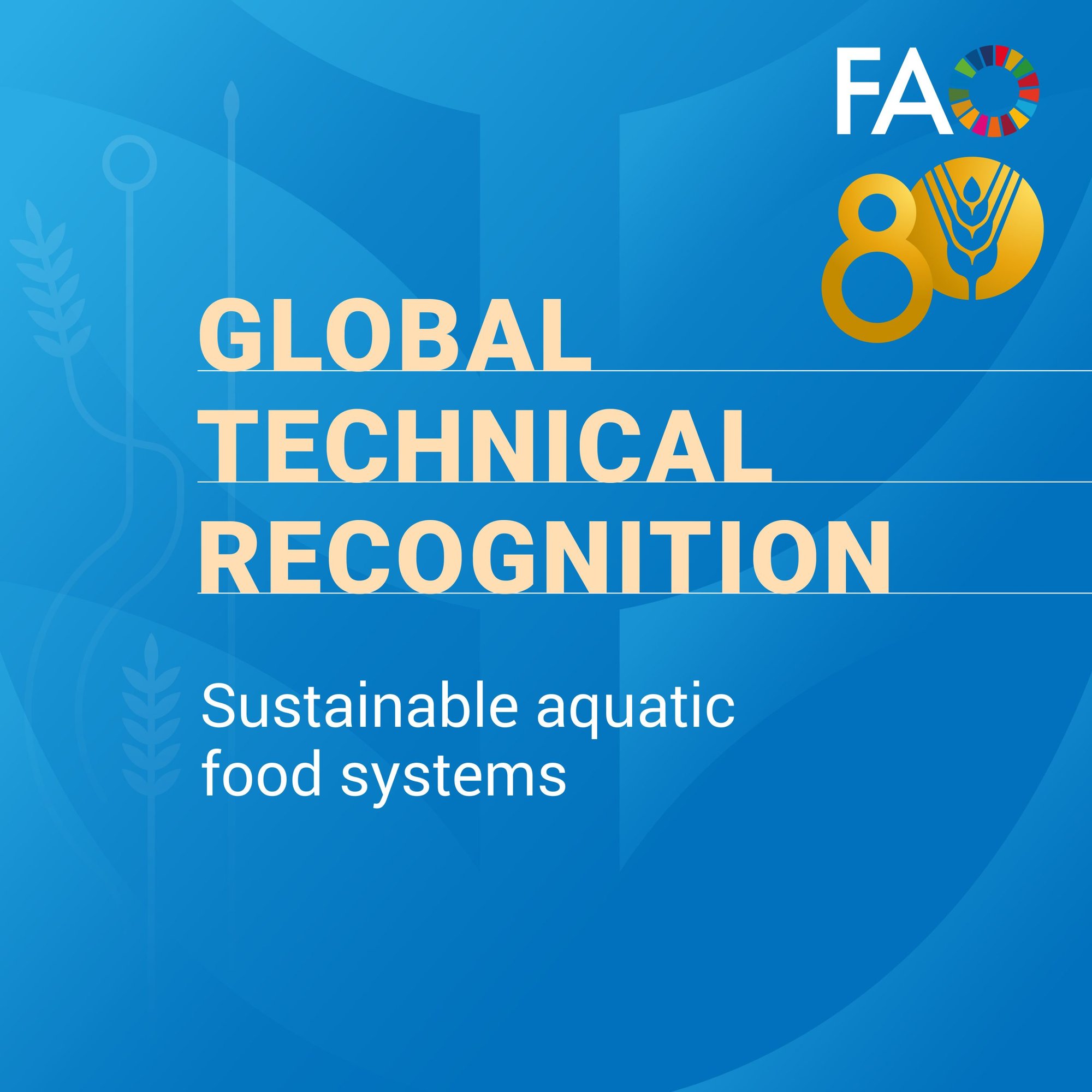
GSA, BAP Recognized by FAO for Sustainable Aquatic Food Systems

GSA and BAP were recognized in the area of sustainable aquatic food systems, which showcases technical leadership collaboration and innovation in agrifood systems transformation. Recognition is aligned with FAO’s four ‘betters’ – better production, better nutrition, a better environment and a better life.

Enhanced Social

October 2025

Strengthening Human Rights Assurances: Enhanced Social Audits

Seafood processing plants that opt into the Enhanced Social Module (ESM) will be required to undergo overnight audits if they operate outside of standard business hours. This measure builds on GSA’s earlier move in August 2024, when fully announced enhanced social audits were phased out. These changes aim to make social audits more representative of real working conditions and less vulnerable to compromise.
BAP Market Research

December 2025

GlobeScan Survey Shows Two-Thirds of Consumers Trust the BAP Label

According to GlobeScan survey data, the top concerns for seafood consumers globally are taste, safety, health and price. Nearly half of consumers say that seafood produced in a way that is safe to eat is an important aspect of farmed seafood. In addition, more than half of consumers (53%) say they want to avoid farmed fish from irresponsible companies.

Where in the World is GSA?

Global Impact

GSA associates attend events globally each year. Here is a sample of where we were and what we did in 2025.

bg icon

In this special section, we take you on a journey through the numerous global events that GSA staff have attended over the past 12 months. From trade shows in Europe to innovative conferences in Asia and impactful sustainability summits in the Americas, our presence has been felt across the seafood industry worldwide. Our participation in these events underscores GSA's commitment to maintaining a strong global presence and to being recognized as leaders in the seafood sector. Each event has provided us with opportunities to engage with industry leaders, share our expertise, and stay abreast of the latest trends and innovations. By showcasing our involvement in these gatherings, we aim to highlight our dedication to promoting responsible practices and fostering collaboration within the global seafood community. Join us as we reflect on a year of impactful engagements. For more, check out #WhereInTheWorldIsGSA!

Sustainability in Action with US Soy Conference

Sustainability in Action with US Soy Conference

Panama City, Panama
GSA's Senior Vice President of Market Development, Steve Hart, was invited to speak at the US Soybean Export Council (USSEC) Sustainability in Action with US Soy Conference. Steve spoke on the role that aquaculture standards like BAP play in promoting responsible soy sourcing policies in seafood supply chains, with a focus on shrimp aquafeeds. There may be many challenges when it comes to this topic, but collaboration with equally committed partners will pave the path forward.
Thai Union Shrimp Processing

Seafood Processing Standard Training

Samut Sakhon Province, Thailand

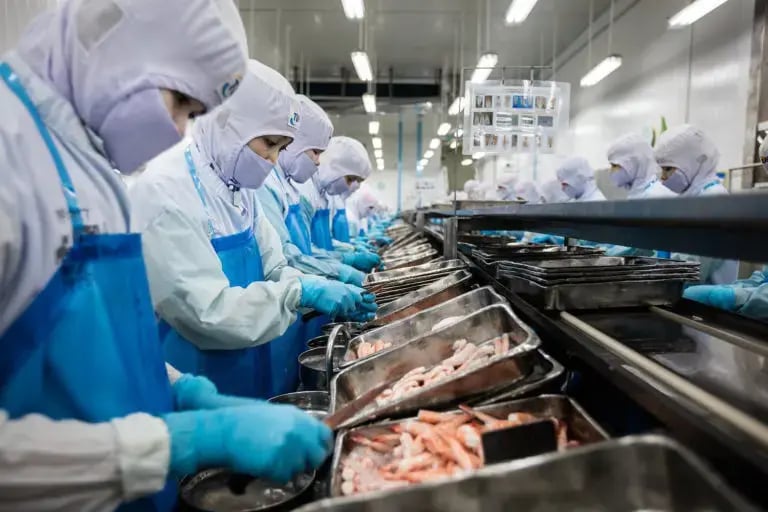
GSA Country Coordinator, Rachaneewan Khamman, held a training that was an outstanding success with Okeanos and Thai Union. Rachaneewan presented: BAP's SPS 6.0. SPS Version 6.0 has a new modular approach designed to improve audit efficiency, support wild-capture processing facilities, and provide a more customized approach to the facility under assessment. Under this new format, facilities are only audited to modules that are applicable to their specific operation, resulting in a more efficient audit that provides the same level of assurances.

Oyster Restoration

Oyster Reef Conservation Program

Durham, New Hampshire, USA
Team members from GSA participated in a (local to GSA HQ!) oyster reef conservation volunteer program in Great Bay Estuary with The Nature Conservancy (TNC). As many as one thousand acres of live oyster reef may have covered the estuary in 1970, but over 90% of oysters were lost due to pollution, harvest and disease. Without oysters, Great Bay Estuary is lacking the natural filtration capacity to maintain healthy eelgrass beds and fish nurseries as nitrogen and siltation increase. Now, the oysters are making a big comeback. Since 2009, TNC and partners have rebuilt dozens of acres of reef and restored millions of oysters, accelerating recovery each year.
Seafood Expo Bharat

Seafood Expo Bharat

Chennai, India
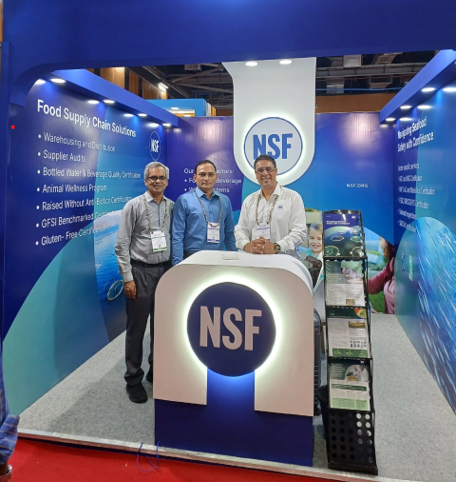
Panchu Duraisamy, GSA Country Coordinator - India, Bangladesh and Sri Lanka, attended the Seafood Expo Bharat (SEB). SEB was hosted by Marine Products Exports Department Authority, with over 2,250 delegates in attendance at the 3-day event. The Expo provided a fantastic opportunity to connect with BAP-certified facilities, from Avanti Frozen Foods to Z.A. Sea Foods, government officials, and third-party certification bodies.
World Ocean Day: Balancing Nature and Nourishment

World Ocean Day: Balancing Nature and Nourishment

Tuscon, Arizona, USA

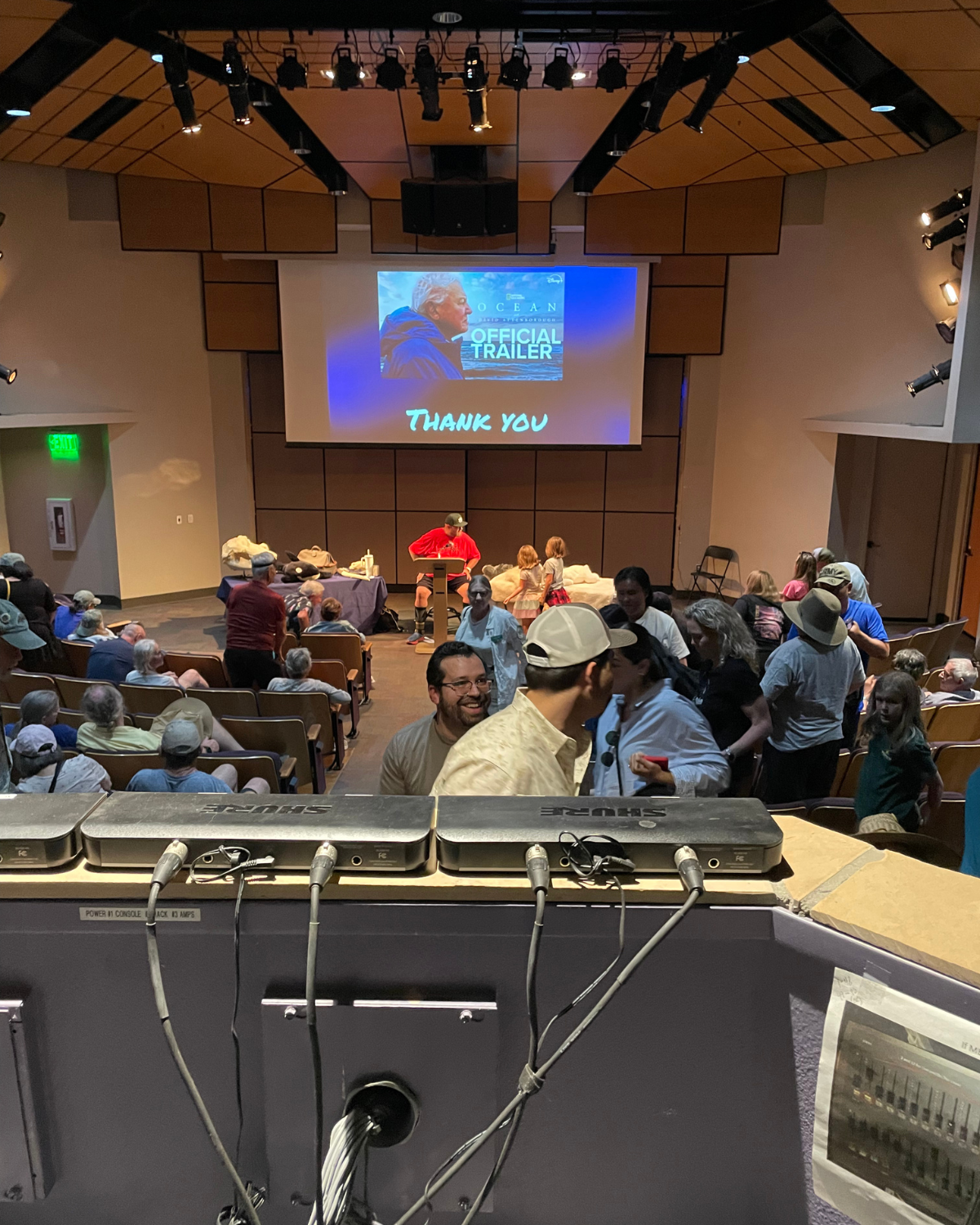
GSA Director of Market Development Latin America, Bill Hoenig, spoke at the Arizona-Sonora Desert Museum for #WorldOceanDay, educating 100+ attendees about all of the work it takes for seafood industry professionals to get seafood onto their plates – both farmed and wild-caught seafood! His presentation was called "Balancing Nature and Nourishment: Stewardship in Ocean & Aquaculture Practices."

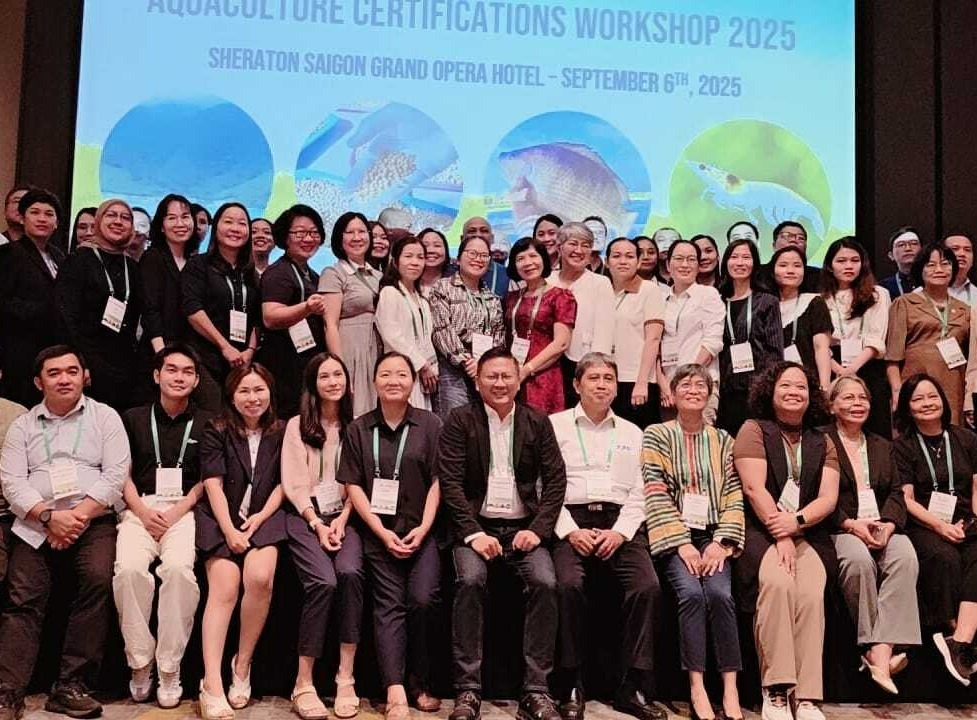
USSEC Vietnam

Southeast Asia Aquaculture Certification Workshop

Ho Chi Minh City, Vietnam
Our own Nguyen Thi Thanh Binh, Country Coordinator in Vietnam, and Syamsul (Sam) Arifin, Country Coordinator in Indonesia, represented GSA at the USSEC Southeast Asia Aquaculture Certification Workshop in Ho Chi Minh City. The workshop gathered industry leaders, NGOs, policymakers, and certification bodies to talk about how programs like BAP can help seafood producers face global trade challenges while boosting responsibility, traceability, and food safety.

Advocacy

Advocacy

Advocacy

GSA-Logo_transparent-768x432-1

Membership & Advocacy

Our members: the backbone of our mission
Organizations, producers, individuals and students that align themselves with GSA are advancing responsible seafood practices around the world

30+

corporate members

8500+

total membership
program

79%

member renewal rate

Corporate Members

as of December 2025

corporate members december 2025-1

Why Corporate Membership?

Don’t just do the good work, get recognized for it. Amplify your impact through trusted platforms with real reach.

Seafood With Standards Campaign

What is aquaculture?
Seafood Environmental Impact
What happens to your seafood before it hits your plate?
5 steps to being a smart seafood shopper

GSA Will Require All BAP-Certified Shrimp Producers to End Eyestalk Ablation by the End of 2030

GSA will require all shrimp production facilities around the world certified to BAP certification standards to end eyestalk ablation or the sourcing of shrimp postlarvae from hatcheries that engage in the practice by the end of 2030.

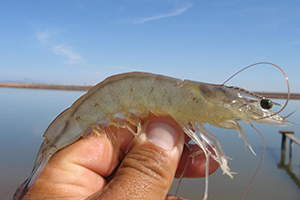
Eyestalk ablation – the pinching, cauterizing or surgical removal of a broodstock female shrimp’s eyestalk – is a breeding technique that prompts the spawning process and has been a standard practice in shrimp hatcheries for nearly four decades. The eyestalk of a shrimp contains a complex of glands that influence molting, sexual maturation and egg production.

For the past several years, GSA has funded and undertaken extensive research to identify commercially viable alternative methods to eyestalk ablation and has collaborated with academic, NGO and industry partners to ascertain the challenges associated with an industry-wide shift to shrimp farming without ablation. Last year, the organization shared the results of a survey conducted with shrimp producers in key production regions to determine the industry’s readiness for adopting alternative methods and the primary obstacles to achieving that goal.

As a result of these collaborative efforts, GSA has decided to ban the practice of eyestalk ablation by the end of 2030 and will work closely with BAP-certified producers and industry stakeholders in the lead-up to achieve this goal.

“The years of rigorous due diligence conducted by the GSA team and by our valued external shareholders gives us confidence that BAP-certified shrimp facilities will be able to successfully make the transition to non-ablated shrimp production within five years,” said CEO Mike Kocsis. “It may be a difficult challenge for some producers, but it’s become clear that eyestalk ablation should no longer be considered among the best practices for shrimp aquaculture. Animal health and welfare is one of the four pillars of responsibility that guide all BAP standards, which also include environmental responsibility, food safety and social accountability. Our standards are designed to strengthen over time and reflect the latest knowledge about the impact of aquaculture, an industry that will grow in importance as both the global human population and the threat of climate change increase.”

GSA believes that as aquatic animal welfare research and knowledge have matured, shrimp eyestalk ablation has emerged as an issue that the industry can and should solve through innovation

SeekIt_shrimpDJ_300

and collaboration. Some retailers and consumers have been calling for an end to the practice.

“GSA stands ready to support the global aquaculture industry at all times and be a resource for shrimp farmers everywhere who need assistance making this historically important transition,” Kocsis added.

There are currently nearly 1,900 shrimp farms and 150 shrimp hatcheries around the world with an active BAP certification, producing nearly 800,000 metric tons of shrimp annually. Globally, there are more than 4,000 BAP-certified farms, hatcheries, processing plants for all seafood products combined.

Like what you see in our Annual Report?

Show your support for responsible seafood practices. Join our network of thousands of producers, businesses, nonprofits, students and consumers by becoming a member today.

GlobeScan Global Consumer Survey Results

GlobeScan conducted a global consumer survey in 2025 on behalf of GSA that surveyed 1,000 consumers in five key countries: Canada, France, Spain, the United Kingdom and the United States. The survey sought to understand purchasing decisions related to seafood and and certification labels like BAP and how to engage with consumers about responsible sourcing.

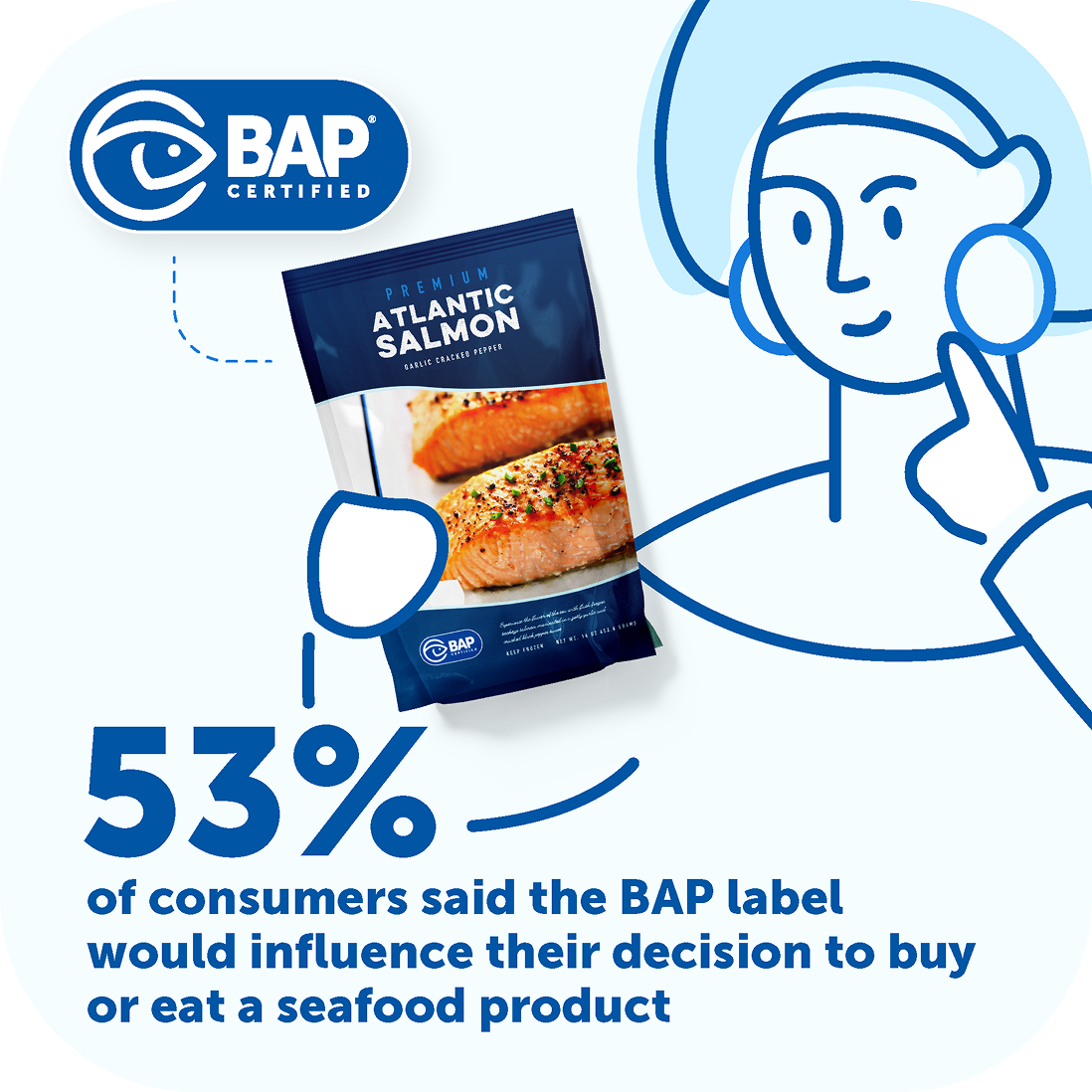
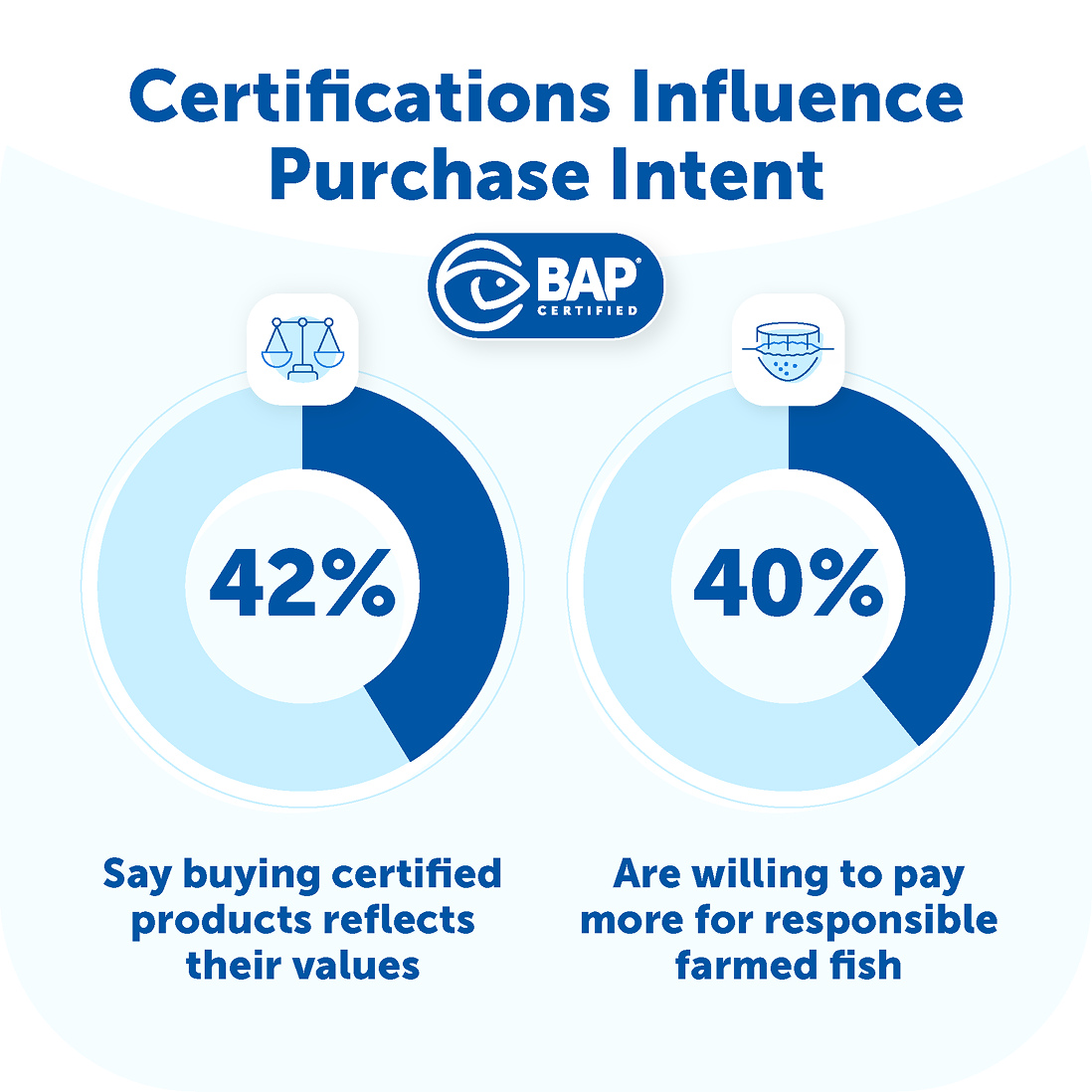
The survey found that the top concerns for seafood consumers globally are taste, safety, health and price. The survey also showed that two-thirds of consumers trust products carrying the BAP label and 53% of consumers said the BAP label would influence their decision to buy or eat a seafood product. GlobeScan and GSA hosted a webinar providing an overview of the key findings from the study which can be viewed here.

66%

of consumers trust products carrying the BAP label

53%

of consumers said they want to avoid farmed fish from irresponsible companies

43%

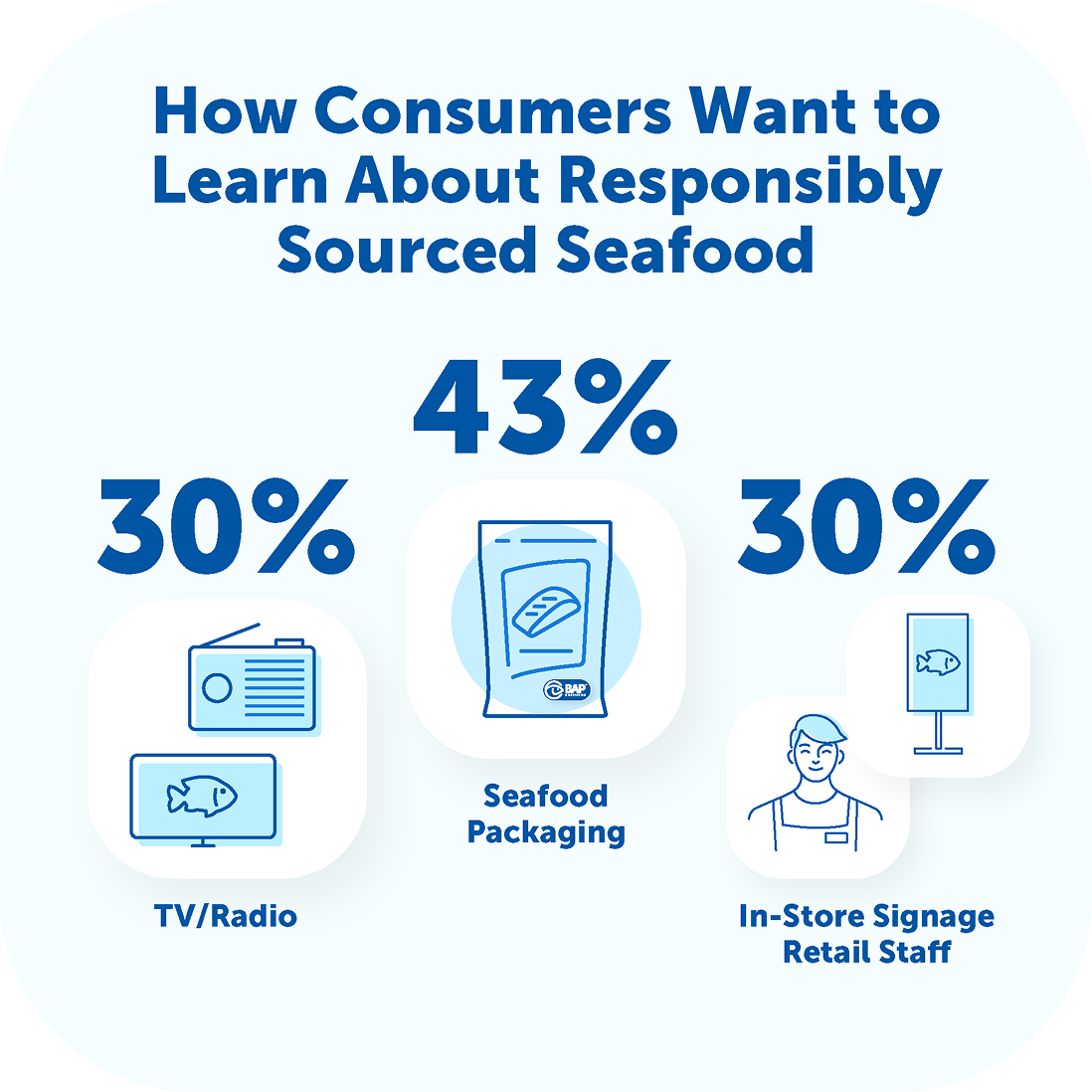
of consumers want to learn about responsible seafood on product packaging

GlobeScan Global Consumer Survey Results

GlobeScan conducted a global consumer survey in 2025 on behalf of GSA that surveyed 1,000 consumers in five key countries: Canada, France, Spain, the United Kingdom and the United States. The survey sought to understand purchasing decisions related to seafood and and certification labels like BAP and how to engage with consumers about responsible sourcing.

The survey found that the top concerns for seafood consumers globally are taste, safety, health and price. The survey also showed that two-thirds of consumers trust products carrying the BAP label and 53% of consumers said the BAP label would influence their decision to buy or eat a seafood product. GlobeScan and GSA hosted a webinar providing an overview of the key findings from the study which can be viewed here.

bap-market-research-01 (1)
image 2
image 3
image 4

Media Coverage

In 2025, the following media outlets reported on GSA and its affiliated brands:
Boston Magazine
chowhound-vector-logo_large
EatingWell
thedailymeal-logo
Fish Site
FoodRepublic_Logo_7x5_3
FoodTank
Food_&_Wine
Forbes-Logo-PNG-File
Good-Housekeeping-Logo
HuffPost.svg
IntraFish
mashed_logo_color_2
New_Hampshire_Public_Radio_logo
Progressive Grocer
Seafood Source
Southern_Living
The Takeout
Tasting Table
Today_logo
Undercurrent News
Yahoo! News
The_New_York_Times_logo

Get Cooking With BAP Recipes

BAP has a variety of nutritious and tasty recipes available that make cooking responsibly sourced seafood easy! Get cooking with these quick, delicious recipes.

Education

rsa-email-logo
Aquademia_Full2023 (1)
rss-logo-full-color

Education

Education

Education

Our educational offerings: supporting the seafood industry
One of the pillars of our work in the seafood space is education. GSA has three educational products spanning three different media types to ensure that our audience receives information in the way that they learn best (online articles, in-person events, and audio podcasts).

The Advocate Magazine

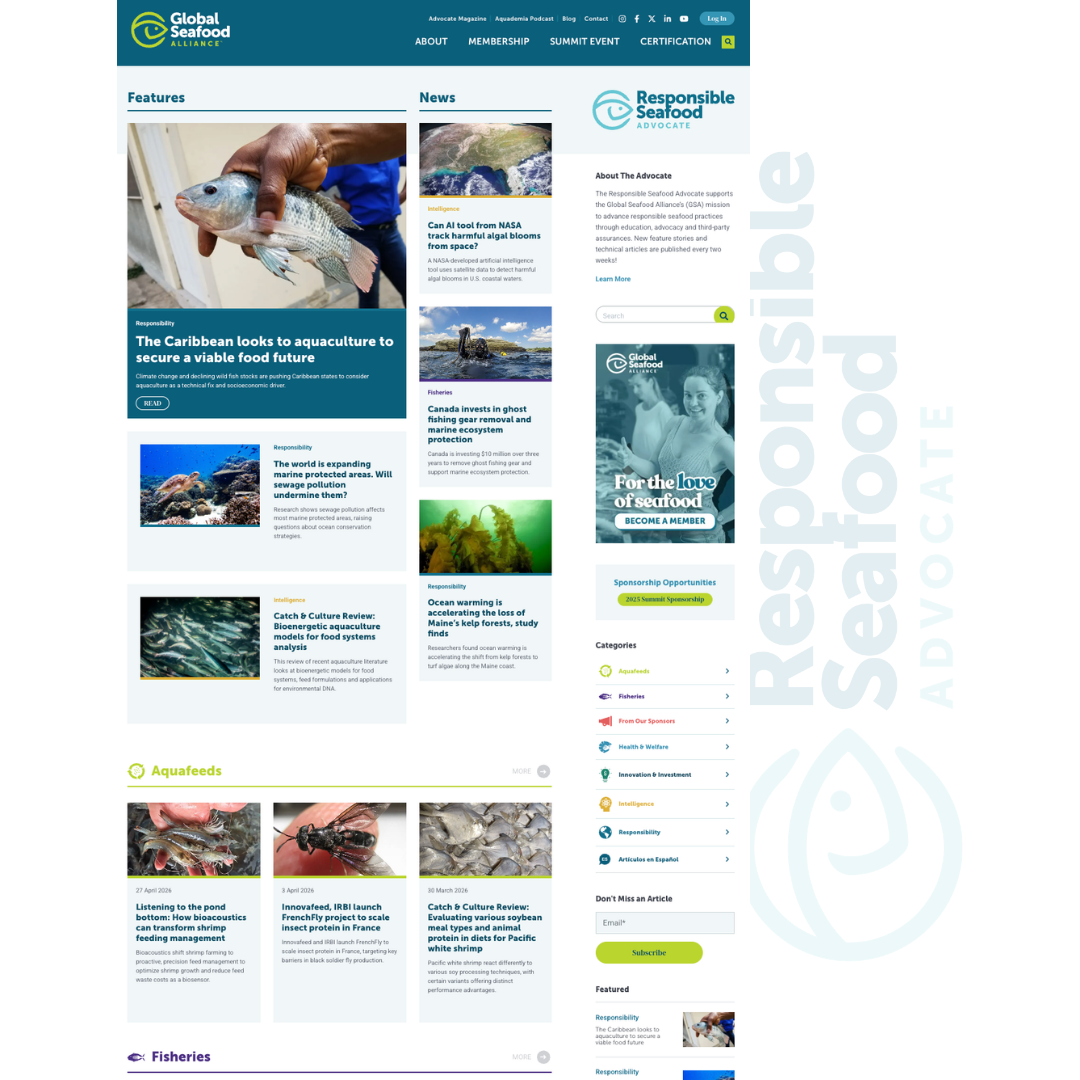
Founded as the Global Aquaculture Advocate, a print publication, in 1997, our magazine went fully online in 2015 and – since GSA’s rebrand in 2021 – has been the publishing as the Responsible Seafood Advocate, covering both aquaculture and fisheries with feature journalism, news and technical papers from around the world. The biweekly email newsletters are sent to more than 20,000 subscribers and the monthly Editor’s Note column consistently gets open rates exceeding 35 percent. Subscribe to the Advocate today!

1M

pageviews in 2025
for the 6th consecutive year

20k+

subscribers

Looking for visibility among qualified seafood professional leads?

Advertise on the Advocate, our online magazine covering a dynamic and evolving industry with objectivity and integrity. The Advocate appeals to industry professionals, academics, marketplace representatives, and more.

Responsible Seafood Summit

Since 2001, GSA’s annual Responsible Seafood Summit has provided a pre-competitive space for delegates from all industry segments to put aside day-to-day business to discuss shared responsibilities and goals. The challenges facing seafood require collaboration — no one organization can solve a problem on its own. That’s where the Summit comes in, as a meeting place for industry segments that don’t normally collaborate to move the dial on the challenges facing seafood.

Seafood Summit 2025
Encouraging collaboration, facilitating dialogue

Same Mission, Expanded Offerings

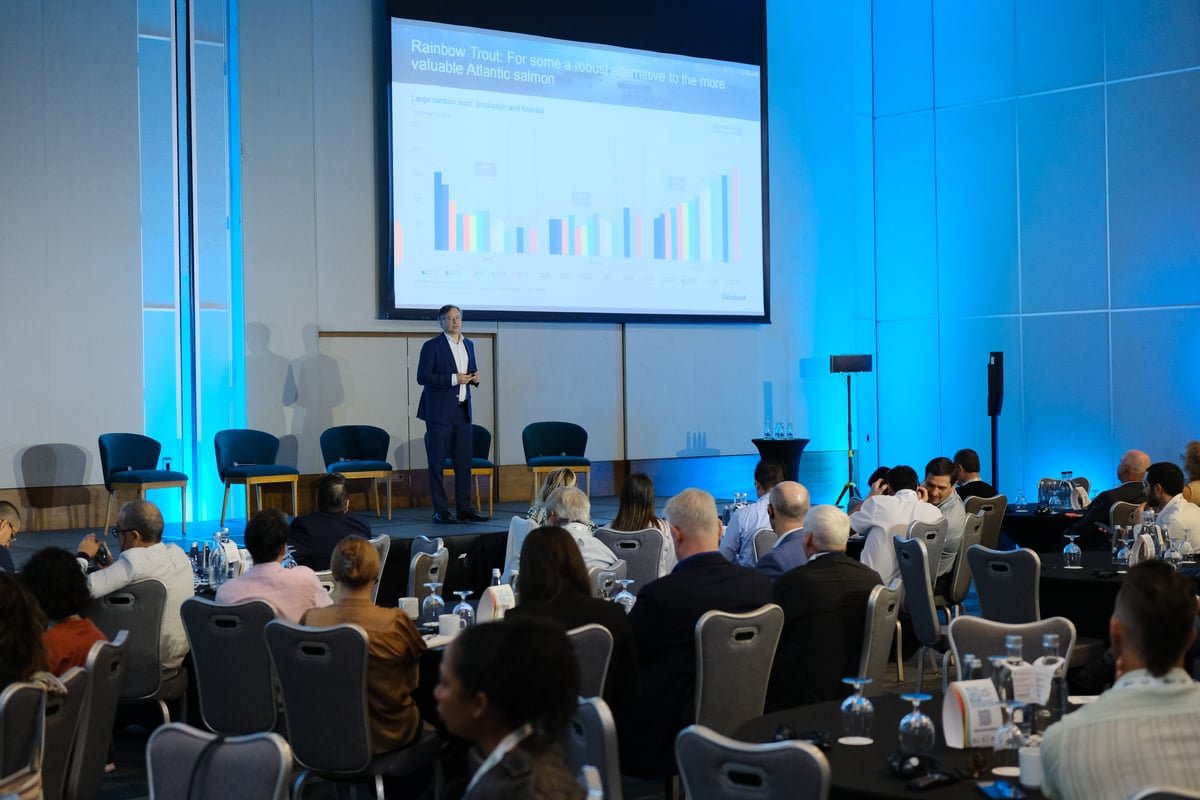
The 24th edition of the Responsible Seafood Summit is in the books! The event was a success, with delegates from over 40 countries descending upon tropical Cartagena, Colombia, to discuss the foremost issues shaping the future of seafood.
Seafood Summit 2025
Curated content

Staying Ahead of the Curve

Held at the InterContinental Cartagena de Indias in September 2025, the event featured over 70 speakers addressing subjects ranging from the impact of omega-3s on human health, to production and sourcing challenges in this new tariff space. The event featured field trips to seafood facilities and tourist destinations, innovation awards, and unforgettable networking opportunities.

24

years

20

cities

4395

unique attendees

Do you want to showcase your organization's commitment to leading the seafood industry to a more responsible future?

Sponsor our conference and get exposure to the industry’s leaders firsthand.

Aquademia Podcast

In 2025, the Aquademia Podcast continued to strengthen its position as a trusted voice in seafood sustainability, releasing 12 new episodes featuring 450 minutes of engaging audio content. Throughout the year, 14 guests from across the seafood industry shared valuable perspectives and innovative ideas spanning fisheries, aquaculture, and responsible seafood production. The podcast also experienced significant audience growth, achieving a 22% increase in total downloads from 2024 to 2025. As listener engagement and global reach continue to expand, Aquademia remains committed to delivering insightful conversations that inform, connect, and inspire the seafood community worldwide.

22%

increase in downloads per episode year-over-year

12

new episodes

450+

more than 450 minutes of audio content

14

influential guests

Demonstration

Demonstration

Listen to Aquademia

Get a taste of the episodes Aquademia Podcast released in 2025.
Wes Rose

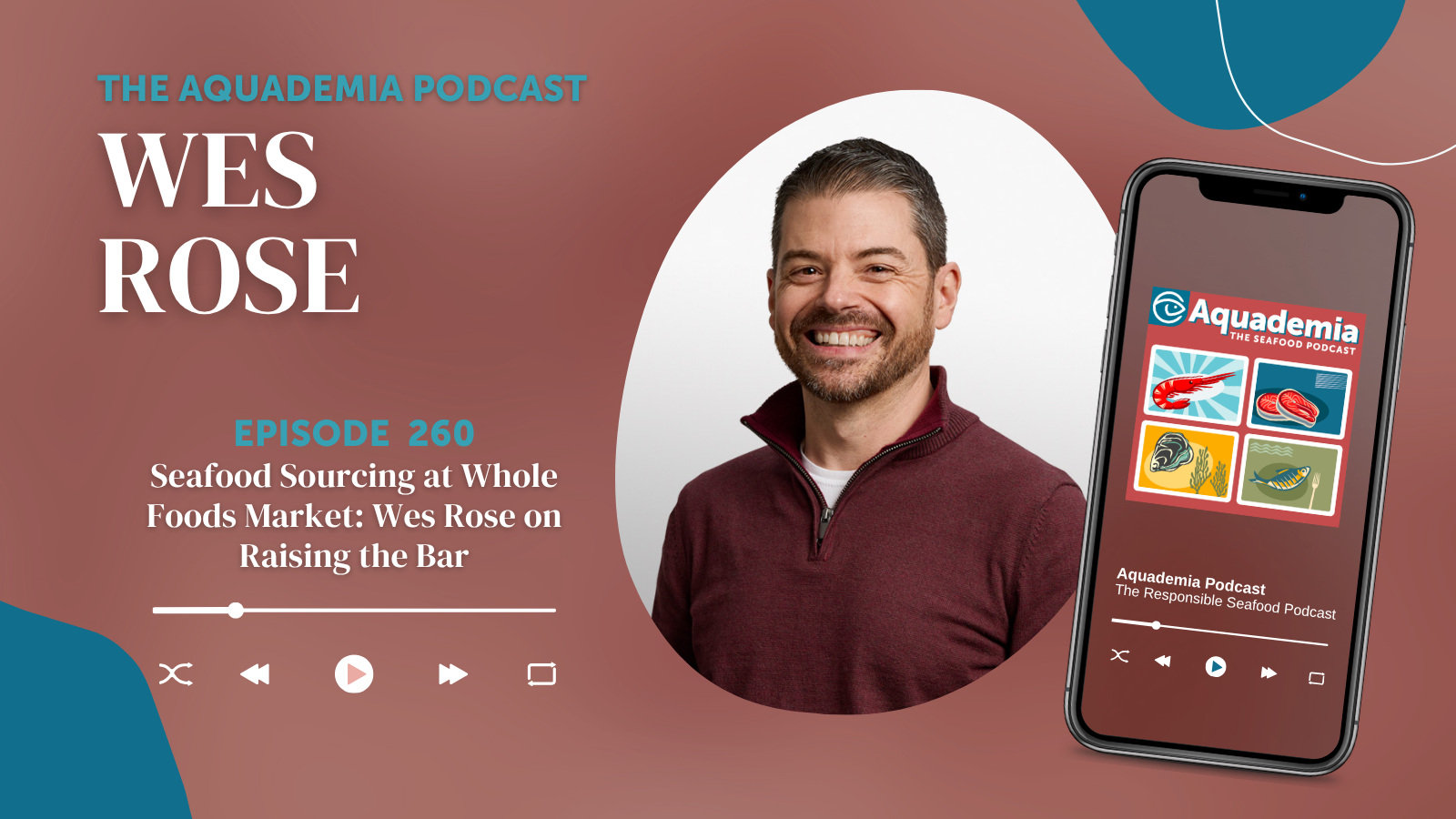
Seafood Sourcing at Whole Foods Market: Wes Rose on Raising the Bar

From the seafood counter in Massachusetts to leading perishables at one of the world’s most iconic grocery brands, Wes Rose has spent nearly three decades shaping how Whole Foods sources, sells, and inspires trust in seafood. On this episode of Aquademia, Wes shares his journey, the evolution of Whole Foods’ sustainable and ethical seafood programs, and the lessons that have guided him from hands-on store work to executive leadership. Tune in for insights on building customer trust, advancing responsible sourcing, and what it takes to make a meaningful impact in the grocery industry.
86

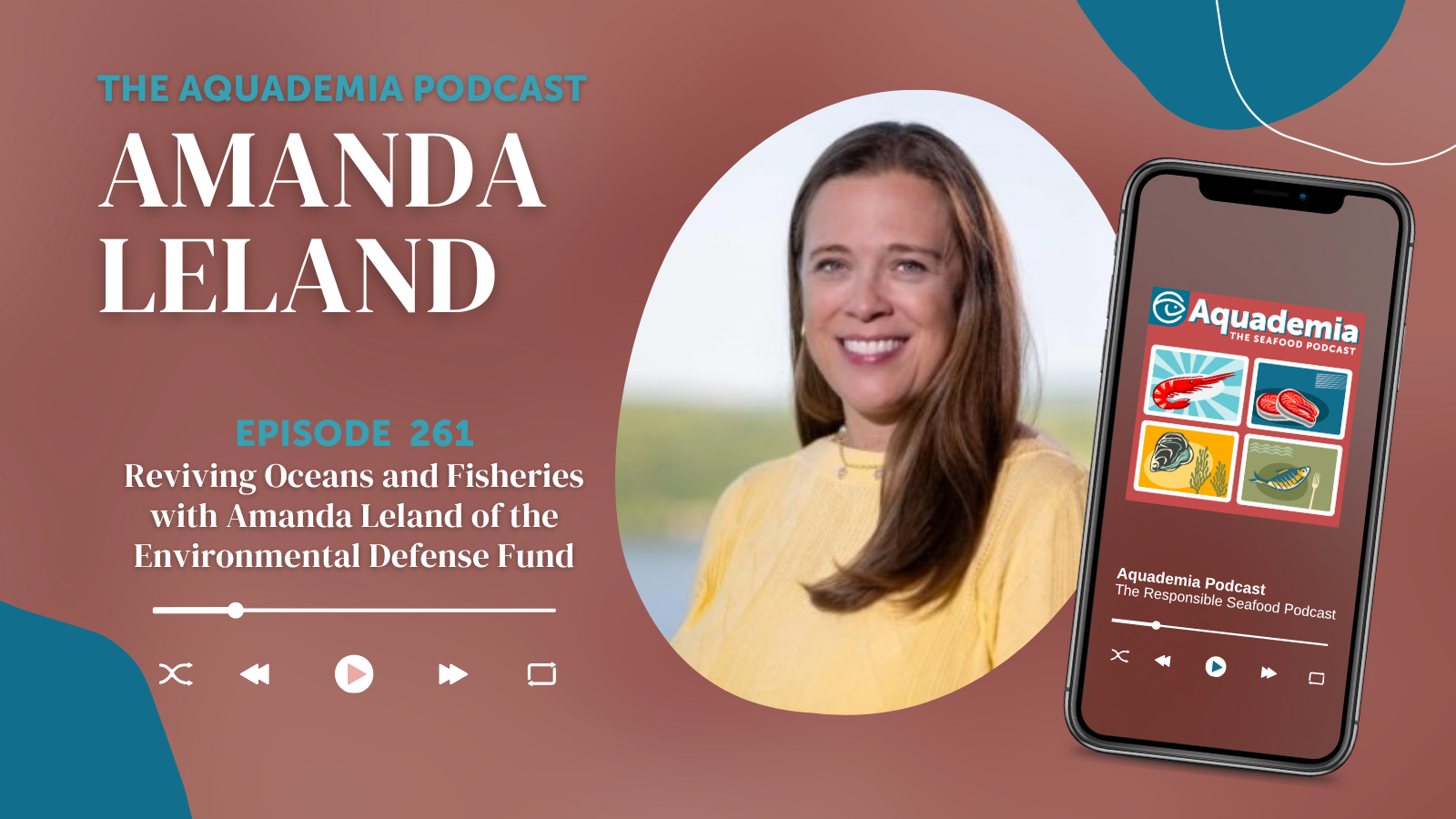
Reviving Oceans and Fisheries with Amanda Leland of the Environmental Defense Fund

Amanda Leland, Executive Director of the Environmental Defense Fund, discusses how her early love for the ocean guided her career in marine biology and environmental advocacy. She dives into the inspiration and research behind her book, which explores how market-based solutions are transforming struggling fisheries and rebuilding over 50 U.S. fish stocks. The conversation also highlights the compelling story of fisherman Buddy Guindon and offers insights into how practical, community-driven solutions can tackle environmental challenges.
84

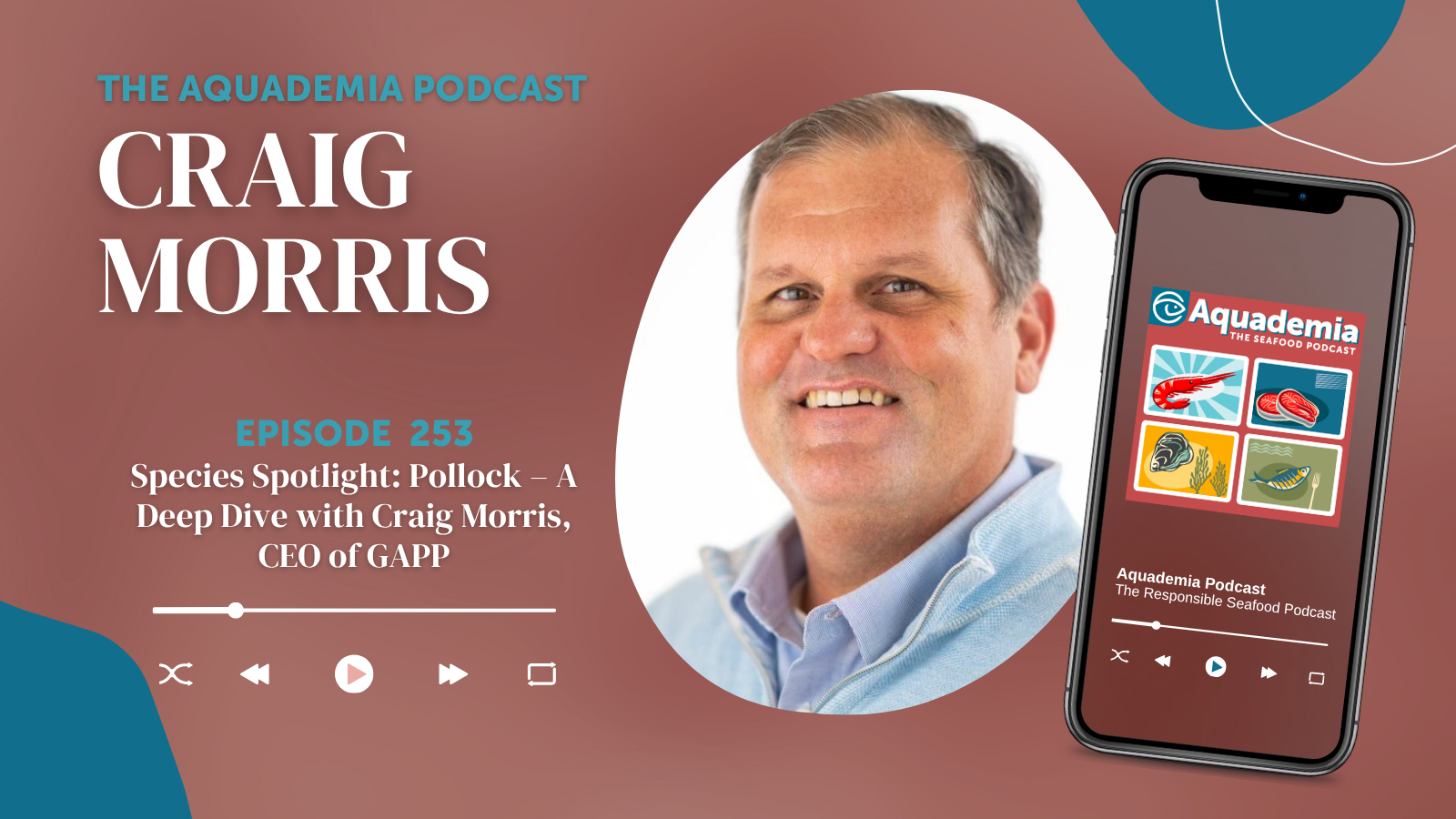
Species Spotlight: Pollock – A Deep Dive with Craig Morris, CEO of GAPP

Let's dive deep into the world of Wild Alaska Pollock with Craig Morris, CEO of the Association of Genuine Alaska Pollock Producers (GAPP). Craig shares insights on what makes Pollock a sustainable and versatile seafood choice, the industry's impact on Indigenous communities, and how marketing efforts are shifting consumer perceptions. Tune in to learn about the future of Pollock, its role in global markets, and why it's more than just a fish in your favorite seafood dishes.

Demonstration

BAP-logo-782x278
BSP-logo-782x278

Certification in 2025

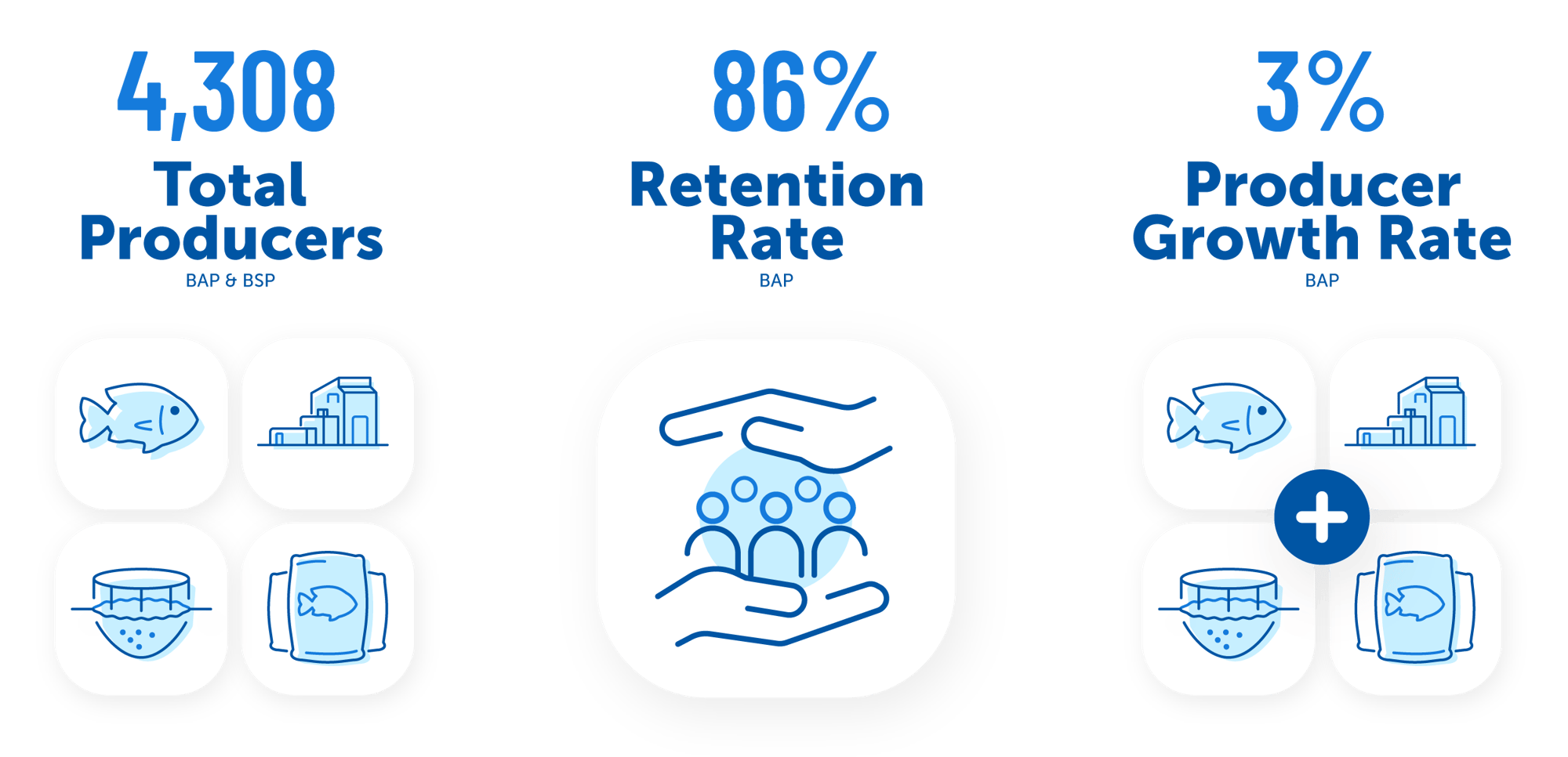
Producers certified to GSA's BAP and BSP programs made a total of 7,808 improvements across their operations in 2025. Certification programs grew 3 percent in 2025, ending the year with a total of 4,308 certified producers in 45 countries. This is a testament to the producers around the world who are committed to advancing responsible seafood practices globally.

New and Updated Standards in 2025

1

Seafood Processing Standard 6.0

Effective November 2025
2

Salmon Farm Standard 3.0

Approved June 2025, published August 2025, effective date to be announced
3

Mollusk Farm Standard 2.0

First draft and public comment completed 2025, approval and publication 2026
4

Pre-Processing Monitoring

To further strengthen our supply chain assurances, GSA has launched a new initiative to monitor pre-processing activities

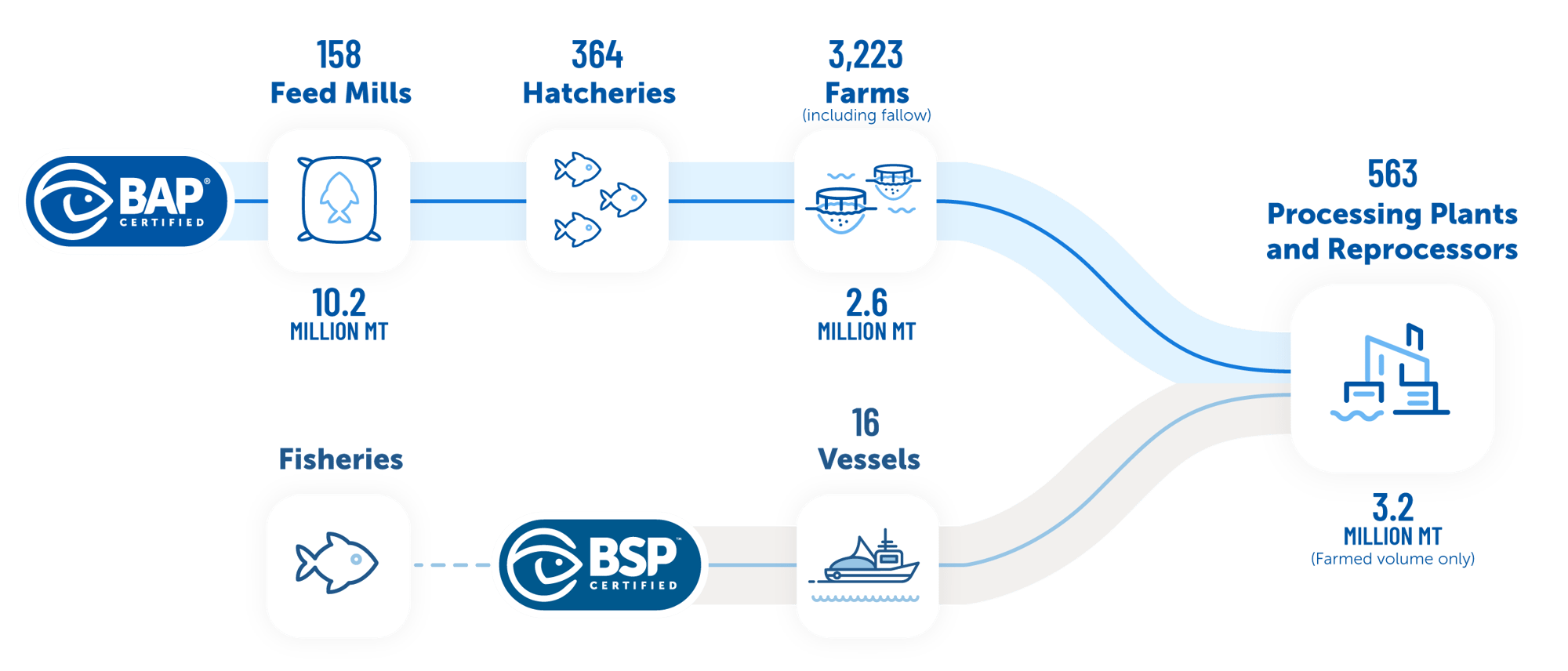
Certified producers

across the supply chain

gsa-bap-2025-supply-chain-graphic-003
yoy-producers-rententino-growth-2025-001

Marketplace Spotlight: ShopRite

ShopRite, a retailer with nearly 280 locations in the eastern United States, launched a guide to its seafood standards, new point of sale materials and updated their website with new messaging to educate their customers about responsible sourcing and the BAP program. ShopRite is part of the Wakefern Food Corp. supermarket cooperative and is committed to sourcing 4-star BAP-certified seafood, including 100% of its farm-raised private-label shrimp.

ShopRite-Seafood-PDF-(1)

Global impact

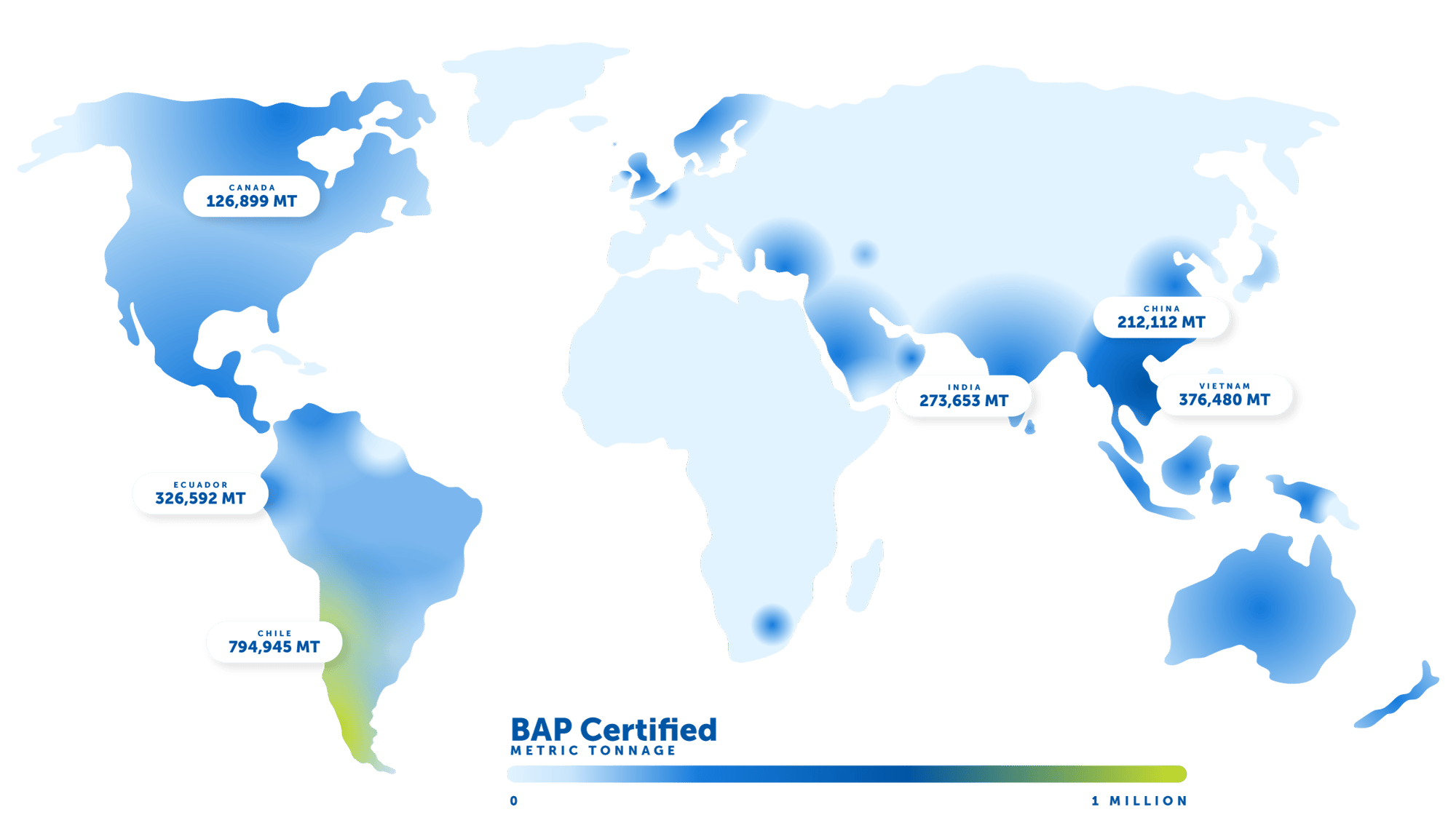
in 2025 by metric tonnage

BAP-certified production is global. This heat map highlights the metric tonnage of certified product at the farm level by country, demonstrating the program’s reach and impact across markets. This map only showcases countries with metric tonnage greater than 100,000.
metric-tonnage-map-2025

Non-conformities addressed

in 2025 by pillar

A core tenet of our certification programs is continuous improvement. To support this, when an audit identifies non-conformities to our standards, we require all findings to be resolved and fixed to attain certification. Remediation is a central part of our program and is critical to supporting best practices across the industry.
outline_icon_white_social_responsibility

Social Accountability

2542

outline_icon_white_food_safety

Food Safety

2523

outline_icon_white_environment

Environmental

1950

outline_icon_white_animal_welfare

Animal Welfare

505

Traceability

288

EMPLOYMENT

348,000

people employed at BAP-certified facilities

employment-graphic
production-graphic

PRODUCTION

65

BAP-certified species

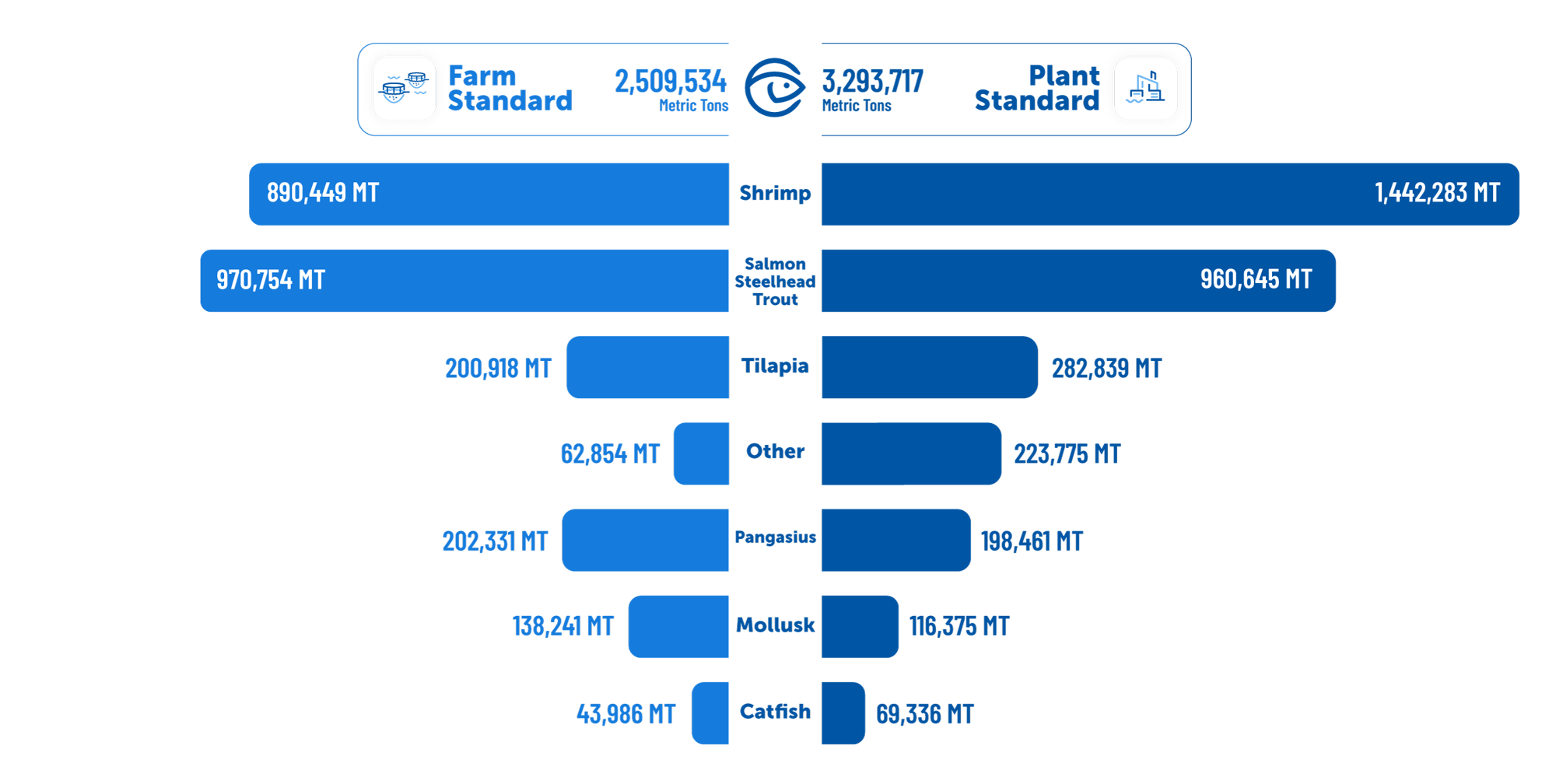
Metric tonnage

BAP-certified farm and plant volume by species

metric-tonnage-by-species-2025-001

Get Involved

There are lots of ways to stay involved with GSA and the responsible seafood movement. Find what fits you or your business.
Email Signup

Stay in the loop

Get the latest on responsible seafood delivered to your inbox.
Become a member

Join us

Connect with the global community driving seafood forward.
Register for the Responsible Seafood Summit

See you in Bangkok

Reserve your seat at the world's premier responsible seafood event.
Get Certified

Ready to level up?

Show the world your seafood meets the highest standards of responsibility.

Impacts of Certification

Third-party certification ensures credibility and trust, providing independent verification that products meet rigorous standards. It builds consumer confidence, enhances brand reputation, and promotes transparency and accountability across the supply chain.

BAP4StarFrench

GSA Board of Directors

  • Michael Berto, Walmart
  • Eric Bloom, Eastern Fish Co., Inc
  • Joe Chekouras, Mazzetta Company
  • George Chamberlain, The Center for Responsible Seafood
  • Julie Decker, Alaska Fisheries Development Foundation
  • Hon. Rick Doucet, AGW Consulting LTD
  • Tony Downs, Sysco Corp.
  • Laura Garrido, Pescanova USA
  • Citlali Gómez-Lepe, COMEPESCA
  • Bill Herzig, Sustainable Strategies & Initiatives
  • Robert Jones, The Nature Conservancy
  • Allen Kimball, Allen K Kimball Consulting LLC
  • Mike Kocsis, Global Seafood Alliance
  • Moritz Konz, ALDI South Group
  • Hannah Koski, US Foods
  • Santhana Krishnan, Maritech
  • Hannah Lindoff, SeaShare
  • Robins McIntosh, Charoen Pokphand Foods Public Co., Ltd
  • Gorjan Nikolik, Rabobank
  • Ron Patton, Grobest Global Service Inc.
  • Terry Stachowiak, Rich Products
  • Wally Stevens, Global Seafood Alliance
  • Michael Szemerda, Cooke Inc.
  • Trin Tapanya, Thai Union
  • Libby Woodhatch, MarinTrust
  • Jeremy Woodrow, Alaska Seafood Marketing Institute

Standards Oversight Committee

  • Birgitte Krogh-Poulsen, Independent Social Development Consultant
  • Braddock Spear, Sustainable Fisheries Partnership
  • David Dietz, Global Seafood Alliance
  • Duncan Leadbitter, Fish Matter
  • Dr. Hiroe Ishihara, University of Tokyo
  • Ken Corpron, Global Seafood Alliance
  • Lukas Manomaitis, U.S. Soybean Export Council
  • Mariska Bottema, Worldfish
  • Mia Parker, Mowi
  • Miguel Castellanos, Monterey Bay Aquarium
  • Mike Park, Scottish Whitefish Producers Association
  • Dr. Simon Bush, Wageningen University
  • Toby Middleton, Marine Stewardship Council